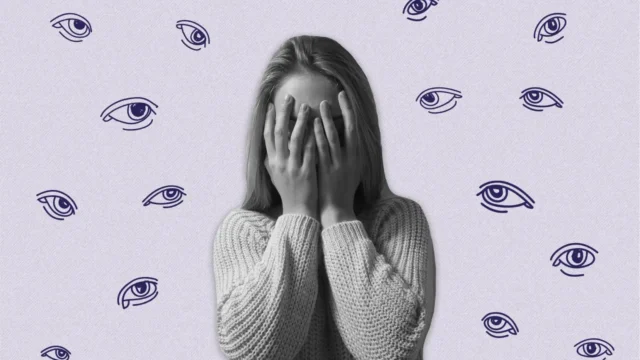
Inspired by last month’s Youth Mental Health Day (18 September), I found myself reflecting on how impossible it feels for young people to truly thrive in a world where everything is watched online– and often criticised.
As if trying to navigate adulthood isn’t difficult enough, young people now are having to do it all in a world that is more public than ever before.
Growing up has always involved uncertainty, but today’s uncertainty feels amplified. Every step a young person takes (whether that’s choosing a university course, finding a job, or simply figuring out who you are) seems to unfold under a spotlight. Decisions that once felt personal now feel like a performance, documented online, compared against others and silently measured against expectations that no one ever agreed to, but everyone somehow feels. The emotional climate surrounding young people is shaped by this constant visibility. And when everything feels visible, everything starts to feel comparable. Young people aren’t just making choices, they’re watching thousands of other people make theirs too, often with more confidence, more clarity and more apparent success. It becomes easy to feel defeated, falling behind before you’ve even begun. The smallest decisions can feel like tests, and the natural uncertainty of growing up starts to look like failure in a world that rewards certainty and speed.
The comparison culture doesn’t just shape how young people see others; it shapes how they see themselves. It creates a quiet pressure to be exceptional, to be interesting, to be making progress at all times. And when life inevitably becomes messy or slow or confusing, the “perfect” life you see on social media can make you feel like you’re the only one struggling – even though that couldn’t be further from the truth. But what often gets overlooked in all of this is the quiet, internal work young people do just to get through the day. Behind the curated confidence and carefully managed progress, many are masking a level of anxiety that never quite settles. It’s the kind of anxiety that makes you overthink every tiny decision, second-guess your abilities or forces you to pretend you’re fine because you don’t want to draw attention to the fact you’re not.
There’s also a particular kind of shame that grows in this environment. Not the obvious kind, but a softer, more private shame that comes from feeling like you’re not meeting the standards you’ve absorbed from the world around you. Standards no one ever set yet somehow feel impossible to escape. When everyone else seems to be moving forward with ease, it’s easy to believe you’re the only one who hasn’t figured things out. That belief can sit heavy, even when it isn’t true.
What’s even heavier is the fear of asking for help. Not because young people don’t want support, but because reaching out can feel like admitting defeat. In a culture that celebrates resilience, saying “I’m struggling” can feel like breaking an unspoken rule. So instead, many stay quiet, hoping the feeling will pass, hoping they’ll catch up, hoping no one notices the cracks.
But cracks aren’t signs of failure – they’re signs of being human. And slowly, young people are beginning to realise that they’re not alone in feeling this way. There’s comfort in talking honestly, in friendships that don’t expect you to be perfect, and in small moments of connection that make everything feel lighter. Creative outlets can help too. Drawing, writing, music – anything that lets you express yourself without pressure can feel like a quiet release.
Hope doesn’t arrive all at once. It builds slowly through people who listen, spaces that feel safe, and moments where you’re allowed to be yourself. In a world that’s always loud, these softer places matter. They remind us that thriving isn’t about having everything figured out, but about finding comfort and clarity in the middle of the chaos.
Story by Imogen Brammer, one of our Creative Content Producers.