For many years, Robin believed they would never play music again: full-time work and a strong commitment to activism during their time off left them with no time to explore their creativity. After I have listened to Robin talk about more about their experience as an autistic person, I begin to see that this restrictive schedule spoke to a deeper un-freedom, an invisible architecture of repression that is familiar to anyone who has grown up feeling like they don’t fit in. Vicious bullying at school harmed their sense of self, implanting in them the belief that anything that marked them as different including their musicality – had to be pushed down. In Robin’s own words, they had to “prove their detractors wrong”, which meant spending a long time in overstimulating full time work in order to conform to normality.
Bullying is the sharp-end of the demand to assimilate that haunts autistic people as they move through the world, but it is only one of its forms: the high premium our society places on full-time work, as well as overly rigid social norms, can create a background hum of negative feedback that surrounds autistic adults like a playground jeer.
Initially, Robin tried to counteract some of their negative self beliefs using the Cognitive Behavioural Therapy, or CBT, offered to them by the NHS. Despite being supported by people who Robin describes as “well-meaning and dedicated”, they felt that the CBT they were offered took a one-size-fits all approach to mental health that didn’t work for them. They now know that the mental health challenges they experience due to the intersection between their ASD and their OCD require a different approach. As Robin’s mental health continued to deteriorate without the right support, they suffered worsening symptoms of depression and autistic burnout, which came to a head during lockdown, as they began to feel isolated from their community.
My conversation with Robin about this time in their life brings to mind a fragment of Dockery and Son, a poem by Philip Larkin that I haven’t thought about in years: “Where do these innate assumptions come from? Not from what / we think truest, or most want to do”. As we move through the world, we all pick up beliefs about ourselves from other people, and for autistic people the ones that are on offer often directly contradict their own desires. The formation of an identity that is acceptable to the world can mean sacrificing the special interests and hobbies that an autistic person most wants to do. In reality as in Larkin’s poem, these negative self beliefs “harden into all we’ve got”, becoming so viscerally real that we forget there was ever such a thing as a true self. When the harsh words and disapproving looks of other people get internalised, they become almost biological in the force they wield over a person, as ineradicable as the need to breath. Depression and anxiety that has been incorporated into the body in this way cannot simply be thought away; it requires a different kind of intervention. For Robin, this intervention came when they found a new therapist.
Robin describes to me how transformative it was for them to find a trusted private therapist who they could build a relationship with. Instead of generic CBT, this new therapist offered Robin CBT adapted for autistic people alongside EMDR. Eye Movement Desensitisation Reprocessing, or EMDR, is a therapeutic approach that involves discussing traumatic memories while carrying out specific eye movements, and is predicated on the theory that these movements help the brain to process its memories. Among the positive changes these new approaches have helped Robin to implement is rediscovering their musicality: they are now a regular attendee at Flourish’s Open Door Jam sessions, which is how I met them.
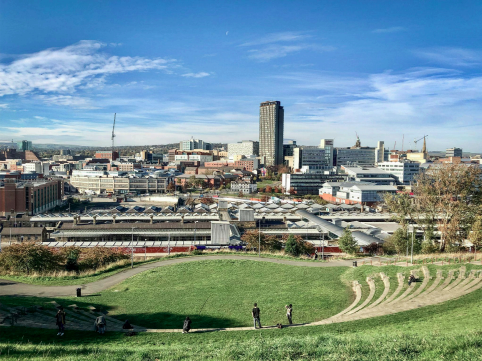
Coming here has been invaluable for Robin in retrieving and repairing the parts of themselves they discarded earlier in their life. They have become more creative and less isolated, finding friends who share their fondness for pop-punk that they also jam with on their own time. Like everyone else I have spoken to about their experience of coming to this group, they praise the volunteers for their ability to bring people out of their shells and put them at ease to perform. At this point in time, Robin volunteers in a charity shop and is training to work on the tills. This will be their first experience of a customer-facing role since leaving behind their intense and overstimulating full time work, and, I hope, a chance to discover what sustainable and meaningful work looks like for them. As we wrap up our conversation, I think of a moment on my weekly drive from Manchester to Sheffield, when the car turns a corner in the Peaks and the Sheffield skyline appears all at once, open and alive